

The Complete Quebec Daycare Compliance & Classroom Setup Guide
Opening or upgrading a daycare in Quebec involves more than choosing furniture. Operators must comply with provincial childcare regulations, maintain hygienic and developmentally appropriate environments, and create classroom layouts that support both safety and learning.
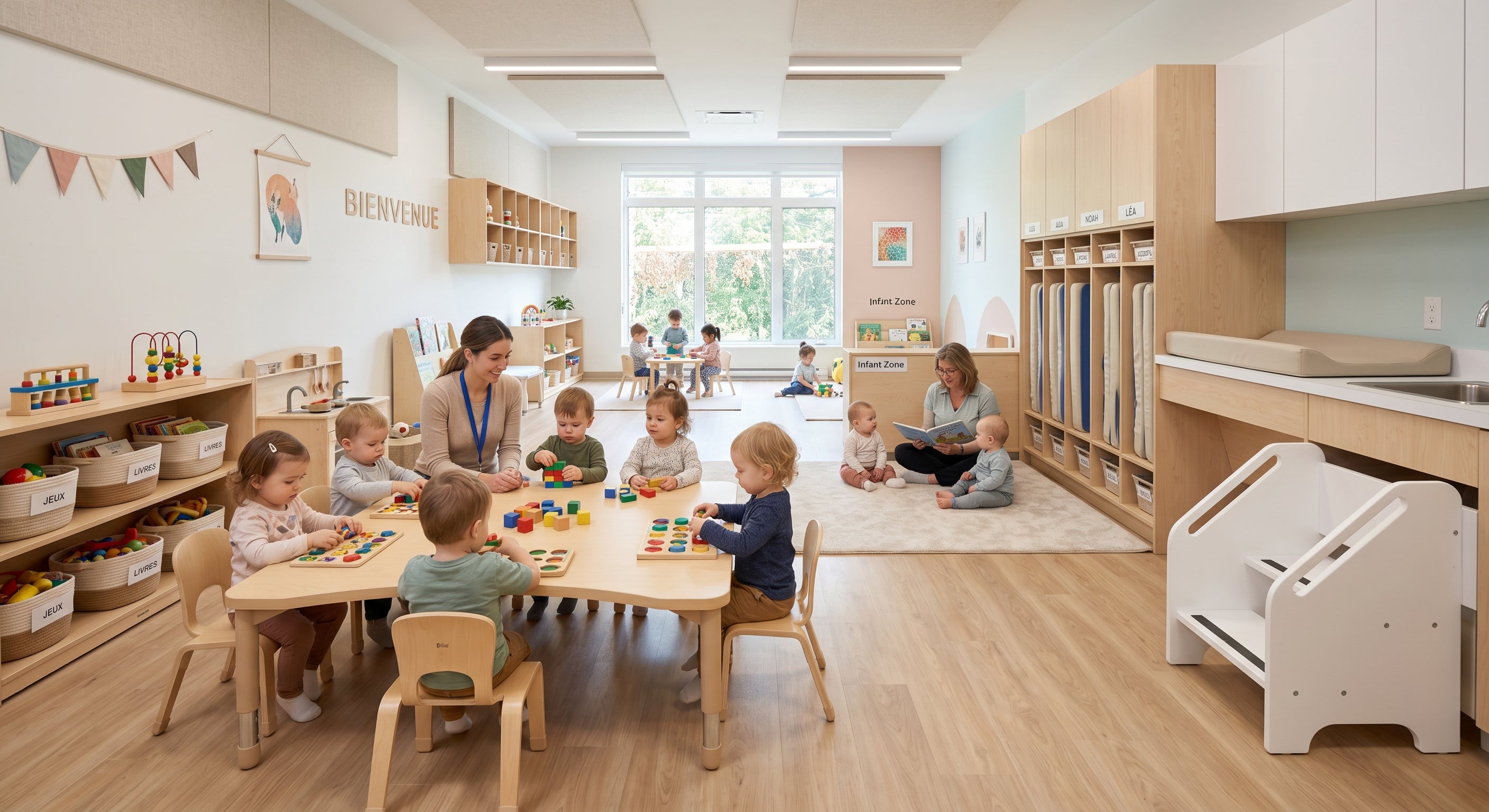
This guide compiles key Quebec childcare requirements, inspection readiness considerations, classroom planning strategies, and furniture standards used by modern CPEs, garderies, and educational childcare environments across the province.
Whether you are planning a new installation, expanding capacity, or upgrading aging classroom infrastructure, this resource is designed to help childcare operators make informed decisions based on real operational requirements, not trends alone.
According to the Government of Quebec, educational childcare environments must provide “a warm, safe environment, with a variety of material and spaces designed for the well-being of children and staff alike” (Government of Quebec, 2025).

Quebec Daycare Regulations Explained
Quebec childcare services operate under one of the most structured childcare systems in Canada. Licensed operators, including Centres de la petite enfance (CPEs), subsidized garderies, and private childcare providers, are required to comply with regulations concerning staffing, classroom safety, sanitation, supervision, and developmental appropriateness.
The Quebec government specifies that childcare environments must support children’s overall development while maintaining environments adapted to each age group’s physical and emotional needs.
Key Areas Operators Must Consider
Staffing & Ratios
Educational childcare providers in Quebec must maintain regulated educator-to-child ratios depending on the age group being supervised. Government guidance also requires qualified staff presence in licensed childcare environments.
How Quebec Daycares Structure Infant vs Toddler Rooms
One of the biggest operational mistakes in daycare planning is treating infant and toddler classrooms the same way. Quebec childcare environments are increasingly designed around age-specific developmental zoning, particularly in subsidized daycare environments and modern CPE facilities.
This directly affects:
- Furniture selection
- Changing station placement
- Rest mat organization
- Storage accessibility
- Supervision visibility
- Cleaning workflows
Infant Rooms (0–18 Months)

Recommended Environment Characteristics
Infant rooms are typically designed around:
- Continuous supervision
- Safe diapering workflows
- Sleep consistency
- Soft circulation paths
- Minimal overstimulation

Recommended Furniture & Layout Features
- Commercial changing stations with integrated stairs
- Individual crib zones
- Closed diaper storage systems
- Antibacterial wipe-clean surfaces
- Rounded-edge furniture
- Clearly separated feeding and sleep zones
Toddler Rooms (18 Months+)

Recommended Environment Characteristics
Toddler classrooms generally prioritize:
- Movement
- Group interaction
- Independent exploration
- Flexible activity transitions

Recommended Furniture
- Adjustable activity tables
- Stackable chairs
- Open-access storage cubbies
- Nap/rest mat storage systems
- Easy-clean classroom surfaces

Operational Insight
Kidicare’s Quebec sales data shows particularly strong demand for:
- Changing tables with stairs
- Rest mat storage cabinets
- Adjustable activity tables
This reflects the operational reality of Quebec daycare environments prioritizing structure, organization, and scalable classroom systems.
Daycare Inspection Readiness in Quebec
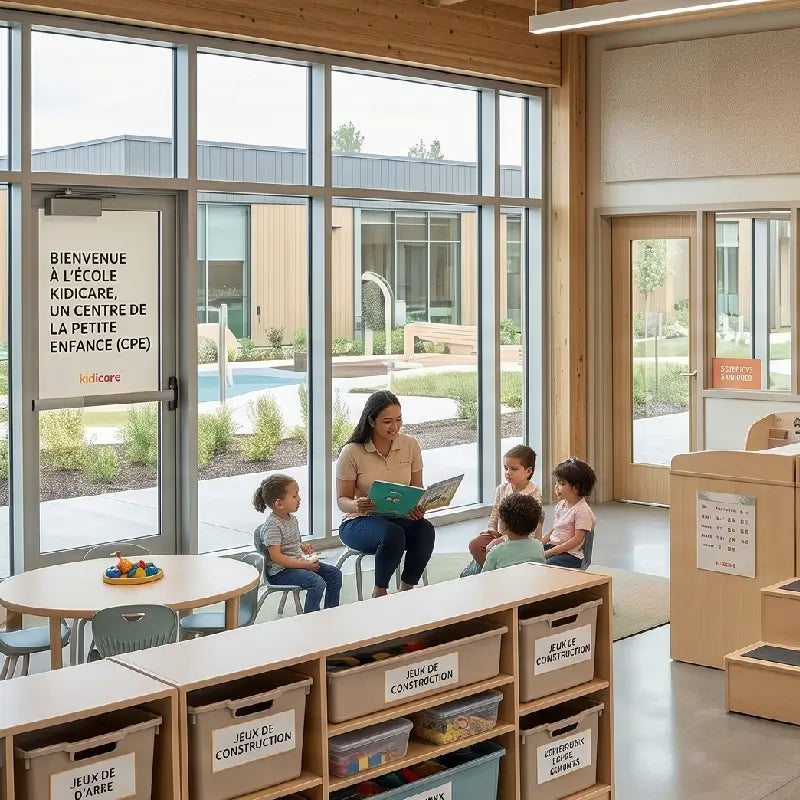
Inspection readiness is no longer just about licensing. Parents, educators, and government bodies increasingly expect daycare operators to maintain environments that are visibly safe, hygienic, and operationally organized.
Inspection concerns commonly include:
- Improper storage
- Difficult-to-clean surfaces
- Furniture instability
- Hygiene practices
- Classroom overcrowding
- Unsafe circulation areas
Common Inspection Readiness Areas

Furniture Stability
Shelving, storage units, and changing stations should be structurally stable and appropriate for commercial childcare use.

Surface Sanitation
Quebec health authorities emphasize regular cleaning and disinfection of surfaces in childcare environments. (Gouvernement du Québec)

Handwashing Accessibility
Proper hand hygiene infrastructure is considered essential in childcare environments. (Gouvernement du Québec)
Commercial Changing Stations: Safety & Compliance
Changing stations are one of the most heavily used pieces of equipment in any infant classroom. In Quebec daycare environments, operators increasingly prefer commercial-grade changing tables with integrated stairs because they reduce educator lifting strain, improve workflow efficiency, support safer transitions, and simplify supervision.
What Operators Should Look For
Rounded Edges & Pinch-Free Design
Furniture used in childcare environments should minimize impact and entrapment risks.
Easy-Clean Surfaces
Quebec hygiene guidance consistently emphasizes surfaces that can be properly disinfected.
Age-Appropriate Access
Integrated stair systems support safer toddler transitions and reduce repetitive lifting injuries for educators.
Organized Storage
Built-in diaper organization reduces clutter and improves workflow efficiency during high-volume care periods.
Rest Mat Storage & Hygiene Standards
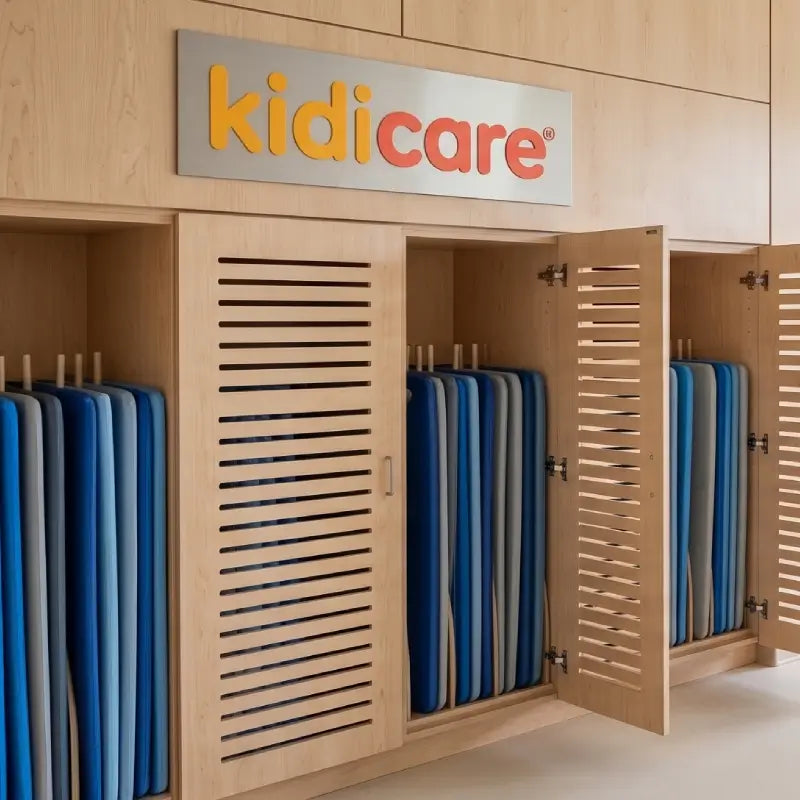
Nap and rest periods are an important part of Quebec childcare routines, but rest mat management is also a major sanitation consideration. Improperly stored mats can trap moisture, reduce airflow, increase contamination risks, and create classroom clutter.
Recommended Best Practices
Vertical Airflow Storage
Storage systems should allow ventilation between mats whenever possible.
Daily Cleaning Routines
Surfaces exposed to repeated child contact should be disinfected regularly according to public health recommendations.
Waterproof Materials
Water-resistant commercial mats improve sanitation efficiency and reduce long-term replacement costs.
Separate Infant & Toddler Usage
Rest equipment should align with developmental age groups and classroom zoning practices.
Furniture Materials Approved for Quebec Childcare Environments
Commercial daycare furniture differs significantly from residential furniture. In childcare environments, materials must support frequent disinfection, heavy daily use, child safety, indoor air quality, and long-term durability.
Important Certifications & Standards
GREENGUARD Certification
GREENGUARD certification evaluates products for low chemical emissions and indoor air quality performance, which is especially important in environments occupied by young children.
CSA Standards
CSA standards are widely recognized in Canada for evaluating safety and performance requirements for commercial environments.
Easy-Clean Antibacterial Surfaces
Furniture materials used in childcare settings should tolerate repeated cleaning and disinfecting procedures without degrading prematurely. Quebec sanitation guidance strongly emphasizes hygienic surface management.
Planning Your Daycare Upgrade
Planning a daycare upgrade in Quebec? Explore Kidicare’s classroom furniture collections or speak with our team about bulk classroom planning and procurement support.


