

The Ontario Daycare Classroom Setup & Furniture Planning Guide
Setting up a daycare classroom in Ontario requires balancing regulatory compliance, operational efficiency, and high-volume usability. Unlike more centralized childcare systems, Ontario’s daycare landscape is largely composed of private operators, expanding childcare centers, and multi-site providers, which places a stronger emphasis on speed of setup, cost efficiency, and scalable furniture systems.

According to the Government of Ontario, licensed child care centres must meet specific standards under the Child Care and Early Years Act, 2014, which governs health, safety, and physical environment requirements for childcare spaces (Government of Ontario, 2024).
This guide breaks down how Ontario daycare operators can design classrooms that are efficient to set up, easy to maintain, and optimized for long-term operational use.

How to Furnish a Daycare Classroom Efficiently
Ontario daycare operators typically prioritize:
- Fast classroom setup timelines
- Modular and scalable furniture systems
- Bundled procurement (multi-item ordering)
- Cost-efficient long-term durability
Under Ontario’s Child Care and Early Years Act, operators must ensure environments are safe, well-maintained, and appropriate for the number and age of children in care (Government of Ontario, 2024)
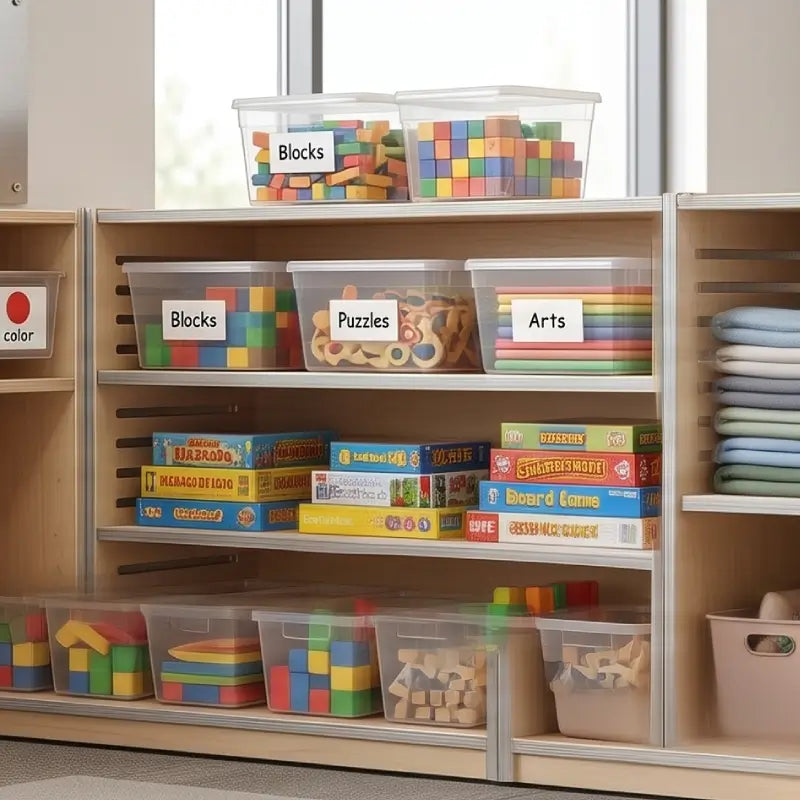
Operational Insight
Efficient daycare furnishing typically follows a “system-based approach” rather than individual item sourcing:
- Classroom kits instead of single purchases
- Standardized furniture across rooms
- Repeatable layouts for scaling locations
- Reduced supplier fragmentation
This approach reduces operational friction and improves compliance readiness during inspections.
The Most Efficient Classroom Furniture Bundles

Core Concept
Ontario daycare operators increasingly adopt bundled procurement models to streamline:
- Purchasing cycles
- Classroom consistency
- Budget forecasting

Typical Bundled Systems
- Table + chair sets
- Multi-age adaptable furniture kits
- Classroom zoning bundles (learning / eating / activity areas)

Operational Advantage
Bundling improves:
- Procurement speed
- Inventory predictability
- Cross-classroom standardization
- Bulk pricing efficiency
Reducing Replacement Costs in High-Volume Childcare Centers
Ontario daycare operators often face high operational wear due to continuous daily usage, cleaning chemical exposure, furniture movement and stacking, and multi-age classroom usage.
Key Cost Drivers
- Frequent chair/table replacement
- Rest mat degradation
- Storage system overload
- Non-commercial-grade furniture failure
Evidence-Based Procurement
Durable commercial furniture reduces lifecycle cost through:
- Lower replacement frequency
- Reduced maintenance time
- Higher structural integrity under repeated use
This aligns with occupational health and safety expectations under Ontario workplace safety standards.
Bulk Ordering Benefits
Bulk ordering supports:
- Lower per-unit costs
- Faster facility expansion
- Consistent classroom layouts
- Simplified maintenance planning
Standardized furniture helps ensure consistent alignment with Ontario licensing expectations.
Key Design Principles

1. Adaptable Layouts
Furniture should support:
- Group learning
- Independent learning
- Activity rotation

2. Multi-Function Furniture
Examples include:
- Adjustable tables
- Stackable seating systems
- Modular storage units

3. Space Optimization
Ontario operators often face:
- Urban space constraints
- High enrollment demand
- Rapid expansion requirements
Flexible furniture systems improve operational scalability.


